

Why choose us
Main Business
Our main business includes woven bags of various specifications and thicknesses, snakeskin bags, valve bags, inner membrane bags, ton bags, container bags, paper-plastic composite bags, color-printed woven bags, weeding cloths, and other plastic packaging products.
Production Equipment
The company uses professional plastic weaving production equipment, a 10-color combined gravure printing machine, a photoelectric deviation correction high-speed compound machine, a centering edge folding machine, and other equipment.
After-sales Service
We provide excellent after-sales service, addressing customer complaints and solving problems effectively.
OEM Solutions
We accept both OEM and ODM orders. Materials and styles can be customized, and we will advise on the minimum order quantity after discussion.
What Is Grass Proof Cloth
Grass-proof cloth is a type of plastic woven fabric made from polypropylene. It is produced through a spinning process and then woven in a circular manner. By adding special raw materials during production, this cloth not only extends the lifespan of outdoor use but also effectively prevents weed growth in commercial crop cultivation and greenhouse environments. The use of grass-proof cloth can significantly inhibit the growth of various weeds. It has sufficient water permeability to prevent water from accumulating on the surface, thus avoiding puddles and keeping the ground clean and walkable. This dual function is highly beneficial.
-
 Add to Inquiry
 -
Add to Inquiry
-
Add to Inquiry
-
Add to Inquiry
-
Add to Inquiry
-
Add to Inquiry
-
Add to Inquiry
-
High Density Grass Proof Cloth
Add to Inquiry


Weeding: The primary function of grass-proof cloth is to prevent weed growth. By blocking light, it inhibits weeds from growing. This method, a form of physical weeding, does not harm crops. Grass that is no taller than 20 cm can be covered directly. Weeds under the cloth will turn yellow and wither in about half a month; if no weeds are present, new ones will not grow.
Insulation and Moisturizing: The cloth helps maintain soil moisture, prevents soil compaction, and aids in fertilizer absorption. It also reduces water, soil, and nitrogen loss.
Waterlogging Prevention: It prevents excessive water accumulation in the soil during rainy periods, thereby reducing the risk of root rot and cracked fruits.
Grass-proof cloth is a valuable tool in farmland and orchards for preventing weed growth and performing other functions. The cloth can be classified into different types based on the materials used. Here is an overview of the various types of grass-proof cloth according to their material:
PE Woven Cloth: Grass-proof cloth made from PE (polyethylene) woven fabric is not of very high quality. This material can emit harmful gases when exposed to high temperatures over a long period and does not decompose easily. Discarded PE cloth can contribute to serious soil pollution.
Woven Bag Fabric: Some grass-proof cloths are made from recycled woven bags. While this approach makes use of available materials, the quality of the resulting cloth is generally poor. Such products are often considered substandard.
Non-Woven Fabric: This type of grass-proof cloth is made from non-woven fabric and black cotton. It is used in various applications but has notable disadvantages, such as a shorter service life, susceptibility to damage over time, and poor environmental performance. Therefore, it is less suitable for wide-scale use.
PP Anti-Sunlight Fabric: PP (polypropylene) grass-proof cloth is the most commonly used type. It is known for its stable performance, long service life, and wide application in agricultural production. Due to its durability and effectiveness, it is very popular in the market.
Applications Of Grass Proof Cloth
Maintain Soil Moisture
Weed-proof cloth covering hinders the vertical evaporation of soil water, increases resistance to evaporation, and encourages lateral water migration. This effectively reduces the ineffective evaporation of soil water. In the absence of precipitation, mulching with weed-proof cloth can increase soil water content at depths of 5 cm, 20 cm, and 40 cm by approximately 13%–15%.
Improve Nutrient Utilization
In agricultural production, weed-proof cloth helps maintain suitable soil moisture in the plant rhizosphere, promotes root system development, and facilitates nutrient absorption by crops. By inhibiting weeds, the cloth reduces competition for soil nutrients, allowing crops to obtain more nutrients.
Increase Crop Yield
Using weed-proof cloth in agricultural production creates an optimal growth environment for crops. This enhances nutrient utilization, improves crop quality, and increases yield.
Control Weeds
Black weed-proof cloth blocks sunlight from reaching weeds and its sturdy structure prevents weeds from penetrating through. This hinders weed photosynthesis and achieves effective weed control. This method is particularly advantageous in hilly and rocky areas where mulching, weeding, and manual weeding are challenging. Studies have shown that weed-proof cloth can nearly eliminate weed growth and is more effective compared to other chemical or non-chemical weed control methods.
Prevent Soil and Nitrogen Loss
Inorganic nitrogen in soil is often lost through surface runoff during heavy rainfall, leading to soil erosion. Vegetated slopes reduce soil erosion through root fixation, but cultivated land, where weeds and other vegetation are removed, is prone to erosion. Laying grass-proof cloth can prevent direct soil erosion from rain, conserve water and soil, reduce nitrogen loss, and protect the ecological environment.
Physical Control of Pests
Many pests use weeds as their habitat. By controlling weed growth with weed-proof cloth, you can reduce pest sources. The cloth also helps prevent pests such as borers and moths that overwinter in the soil. This reduces the need for pesticides, increases crop production, improves the safety and commercial appeal of agricultural products, and meets national standards for vegetable and fruit garden production. Compared to mulch film, grass-proof cloth offers better air permeability, reducing the risk of root rot associated with mulch film. Functional weed-proof cloth made using inter-color warp knitting can also effectively control pests such as aphids through pest evasion.
How to Choose High-Quality Grass-Proof Cloth
When selecting high-quality grass-proof cloth, consider the following main technical indicators: water permeability, tensile strength, width, color, and lifespan.


Water Permeability
This refers to the amount of water that passes through the cloth per unit area per second, reflecting the material's ability to handle surface water. Requirements vary depending on the usage environment. For outdoor use, the material should have a water permeability of 35.0 L/s.m², while for greenhouse use, it should be 31.7 L/s.m².
Tensile Strength
Tensile strength measures the material's ability to withstand external forces such as pulling. To meet international standards, the tensile strength should be greater than 800 N. Currently, our grass-proof cloth has a tensile strength of 1056 N in the longitudinal direction and 944 N in the transverse direction, which complies with these standards.
Width
The width of the cloth affects the laying method and quantity needed. To minimize labor and material waste, use standard-width cloth as much as possible. Our grass-proof cloth comes in rolls of 350 meters, with standard widths including 0.45 m, 0.60 m, 0.65 m, 1.00 m, 1.20 m, and 1.50 m. Custom widths can also be ordered based on customer requirements.
Color
Grass-proof cloth typically comes in black and white. Black cloth can be used both indoors and outdoors. White cloth is mainly used in greenhouses to enhance light levels, promote plant photosynthesis, and reduce heat accumulation, thereby lowering ground temperatures. Our grass-proof cloth is primarily black, but other colors are available upon request.
Lifespan
The lifespan of the grass-proof cloth is crucial as it affects its functionality in weed suppression and drainage. Our cloth generally lasts about 3 years in regions with an average annual light radiation of approximately 70 KOY (e.g., Yunnan, Guizhou, and Sichuan). In areas with around 60 KOY (e.g., Jiangsu, Zhejiang, and Shanghai), it can last even longer.
In the market, you can find various types of weed control fabric. Many people in the industry, including those managing vegetable gardens, orchards, and arboretums, often struggle with choosing the appropriate weed barrier fabric for their needs.
To make an informed choice, it's important to understand the weight of the weed control fabric, which is usually measured in grams per square meter (g/m²). Common weights for weed control fabric include:
- 90 g/m²
- 100 g/m²
- 120 g/m²
- 150 g/m²
Generally, the heavier the fabric, the higher the price. There is a direct relationship between the weight and the cost.
When selecting weed control fabric, it is crucial to consider not just the weight but also the dimensions of the fabric. The width of the fabric affects the laying method and quantity needed. To minimize labor and material waste, it is advisable to choose fabric with standard widths for efficient coverage. Common widths available are:
- 1.0 m
- 1.2 m
- 1.5 m
- 2.0 m
- 3.0 m
- 4.0 m
- 6.0 m
For example, in vineyards, common widths used are 1.0 m, 1.2 m, 3.0 m, and 4.0 m. The length of the fabric can be selected based on the specific needs and layout of the area.
Production Process of Grass-Proof Cloth
Ingredients: Raw materials are weighed according to the process ratio requirements.
Mixing: The weighed materials are mixed in a mixer.
Feeding: Mixed raw materials are loaded into the extruder hopper using a feeder.
Heated Extrusion: The extruder is heated to melt the raw materials and form the film.
Water Cooling: The extruded film is cooled in water.
Slitting: The film is cut into filaments of the required width.
Drafting: The filaments are drawn through a heating oven to achieve the desired width and thickness.
Shaping: The filaments are shaped in a shaping oven.
Winding: The flat yarn is wound into silk bags and stored.
Knitting: The flat yarn is woven into fabric using a knitting machine.
Fixed Winding: The woven fabric is wound into small rolls, and defective products are removed.
Adhesive Head: Tape is used to secure the head and both ends of each roll.
Labeling: Each roll is labeled at a fixed position.
Cutting and Sorting: Defective products are sorted out, and genuine 5m laminations are stacked, bagged, and labeled.
Packing: Rolls and bags are placed into boxes, sealed, and stored in the warehouse.
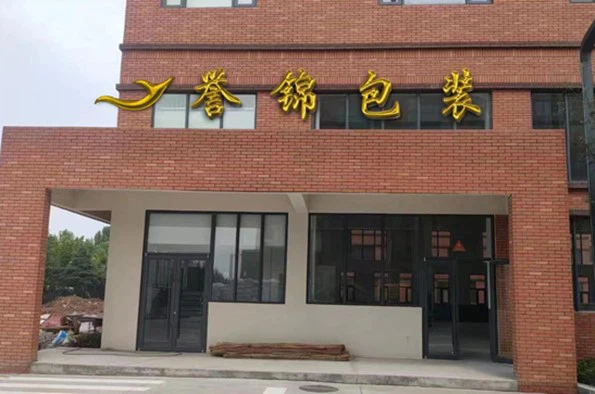
Shandong Yujin Packaging Co., Ltd. has many years of production experience in the woven bag industry. There are multiple woven bag production lines and supporting products, a production technical team and a sales service team, and one-stop service for design and plate making. Main business: woven bags of various specifications and thicknesses, snakeskin bags, valve bags, inner membrane bags, ton bags, container bags, paper-plastic composite bags, color-printed woven bags, weeding cloths and other plastic packaging products.

FAQ
We're known as one of the most professional grass proof cloth enterprises in China. If you're going to buy high quality grass proof cloth at competitive price, welcome to get pricelist and quotation from our factory. For more cheap products, contact us now.
Fruit Tree Weed Control Cloth, Gardening Weed Proof Cloth, Grass Proof Cloth